You Don’t Need A Morning Routine. You Need A Life That Doesn’t Make You Want To Escape It.
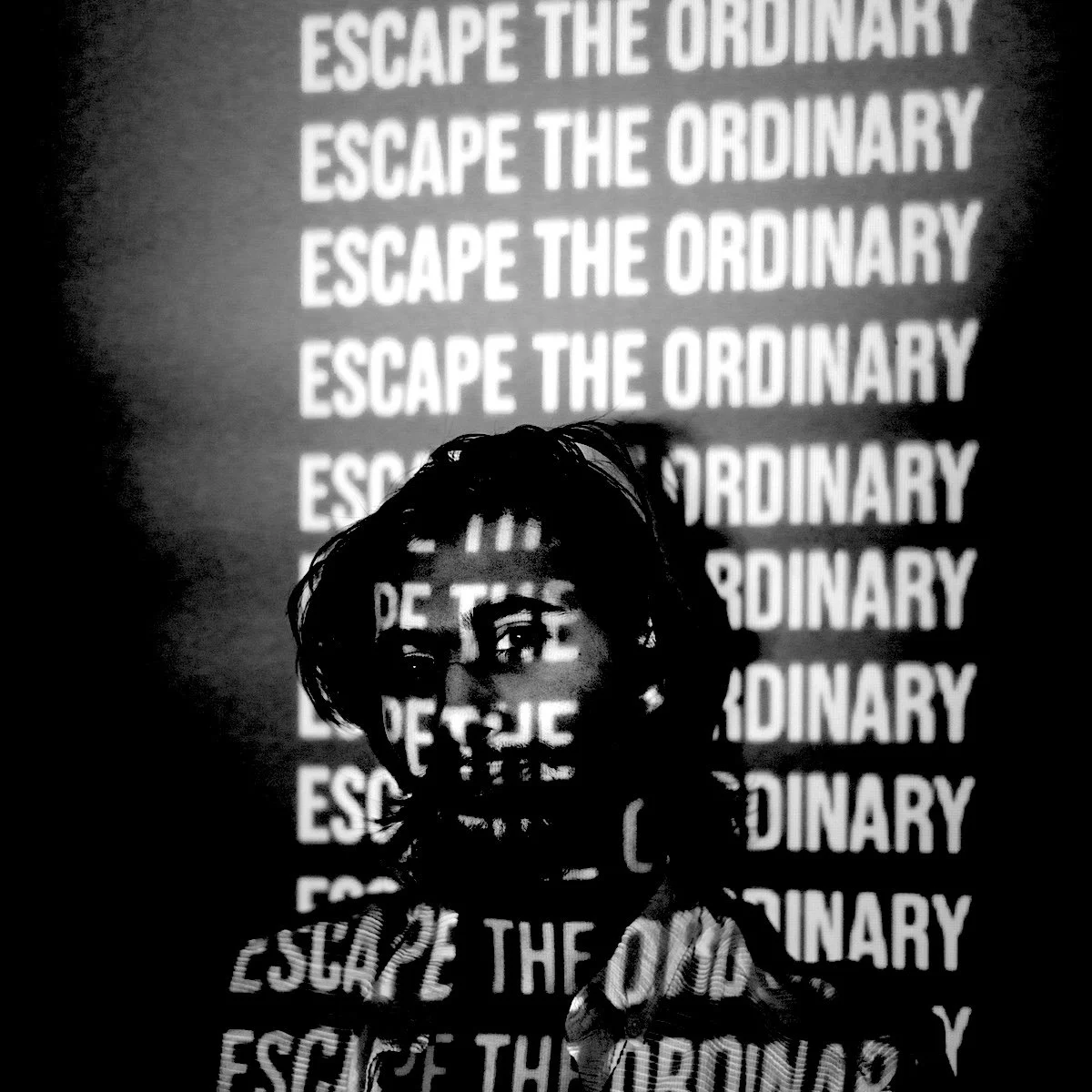
“The mass of men lead lives of quiet desperation.”
– Henry David Thoreau
Men are dying from lives that look impressive online
That’s the dark joke underneath modern male culture.
Men are curating lives they barely inhabit.There’s a strange sadness in watching men optimise themselves for lives they secretly hate.
Ice baths.
Supplements.
Journals.
Five a.m. alarms.
Nootropics.
Tracking apps.
Morning sunlight.
Productivity systems layered on top of productivity systems.
And underneath all of it:
A man who doesn’t actually like his life very much.
That’s the part nobody wants to touch.
Because modern masculinity has become obsessed with managing symptoms instead of confronting causes.
So men become incredibly sophisticated at coping.
Not living.
Grind culture turned self-care into preparation for more work
Even rest became functional.
Sleep is no longer for dreaming or restoration.
It’s performance recovery.
Exercise stopped being embodiment.
Now it’s optimisation.
Meditation became “mental clarity for productivity.”
Everything gets absorbed back into output eventually.
Nothing is allowed to simply exist.
Not even you.
Byung-Chul Han saw this clearly.
The modern man no longer experiences external oppression as much as internal compulsion.
You become your own foreman.
Always pushing.
Always refining.
Always behind.
Always feeling like there’s more you should be doing.
Even your downtime becomes another task to complete correctly.
The real issue is not discipline
Discipline matters.
But discipline in service of what?
That’s the question men avoid.
Because a lot of “high-performance” culture is just emotionally articulate self-abandonment.
Men building lives they don’t enjoy because they’re addicted to the identity of being driven.
A man can become deeply attached to his own exhaustion.
It makes him feel important.
Needed.
Serious.
Superior to softer people.
But underneath the performance is often something far less glamorous:
A terrified inability to stop moving long enough to feel what’s actually happening inside him.
Many men use productivity to avoid intimacy
Intimacy with others.
Intimacy with themselves.
Intimacy with reality.
Work becomes an emotional bunker.
Inside work:
• everything is measurable
• controllable
• reward-based
• predictable
Human life is none of those things.
Children don’t care about your KPIs.
Love doesn’t move in spreadsheets.
Meaning cannot be tracked in quarterly targets.
And that frustrates modern men because they’ve been conditioned to trust systems more than presence.
Winnicott’s point: a false self can become highly successful
This is where things get dangerous.
A man can build an entire impressive life from the false self.
The adaptive self.
The performing self.
The useful self.
And because the world rewards him, he assumes he’s healthy.
Meanwhile the deeper self becomes increasingly unreachable.
That’s why some successful men feel strangely unreal in private moments.
They’ve built an identity around functioning while losing contact with feeling.
You can tell when a man has become all structure and no soul
He cannot rest without guilt.
Cannot sit still without stimulation.
Cannot enjoy things without monetising them mentally.
Cannot experience silence without anxiety entering the room.
Everything becomes instrumental.
Friendships become networking.
Hobbies become branding opportunities.
Fitness becomes identity management.
Even spirituality becomes optimisation.
Nothing touches the heart anymore.
Everything passes through the productivity filter first.
The photos look sharp.
The branding is clean.
The discipline is visible.
Meanwhile:
• the marriage is emotionally dead
• the nervous system is fried
• the friendships are shallow
• the inner life is collapsing quietly
But because the metrics look good, the man keeps going.
This is why so many men secretly fantasise about disappearing.
Not because they truly want destruction.
Because they want release.
The body eventually rebels against constant performance
The nervous system was never designed for endless optimisation.
The body wants rhythm.
Slowness.
Contact.
Breath.
Play.
Depth.
Conversation.
Touch.
Nature.
Unstructured time.
Not permanent extraction.
Men ignore this because grind culture taught them to distrust softness.
But softness is not weakness.
A man able to slow down without panic is often far stronger than the man who cannot stop producing.
The world doesn’t need more optimised men
It needs more alive men.
Men who can laugh properly.
Love properly.
Listen properly.
Rest properly.
Father properly.
Feel properly.
Men who still have access to awe.
To play.
To silence.
To wonder.
Men who are not permanently treating themselves like machinery.
David Whyte’s point: work should enlarge the soul
Not consume it.
Good work deepens a man.
Connects him.
Strengthens his sense of meaning.
Bad work empties him while rewarding him just enough to stay.
Most men know the difference instinctively.
They feel it Sunday night.
The turning point comes when efficiency stops feeling meaningful
Eventually a man notices he has become extremely effective at living a life that no longer nourishes him.
That realisation is brutal.
Because now he must confront a question productivity culture never asks:
“What if the problem is not my routine, but the life the routine is supporting?”
That question can rearrange everything.
The real-world task
For one full day, stop treating yourself like a project.
No self-improvement content.
No productivity tracking.
No optimisation.
Just live.
Eat slowly.
Talk properly.
Go outside.
Read something beautiful.
Spend time with someone without checking your phone constantly.
Notice how quickly guilt appears.
That guilt is not wisdom.
It’s conditioning.
The reflective question
'“If you stopped organising your entire life around productivity, what parts of yourself would finally have room to breathe?”
Stay with the answer.
It probably knows more than your goals do.
Reading list
The Burnout Society- Byung-Chul Han
The Divided Self- R.D. Laing
The Mature Mind- Gene Cohen
Crossing the Unknown Sea- David Whyte
Playing and Reality- D.W. Winnicott