The Hunger That Cannot Be Fed.
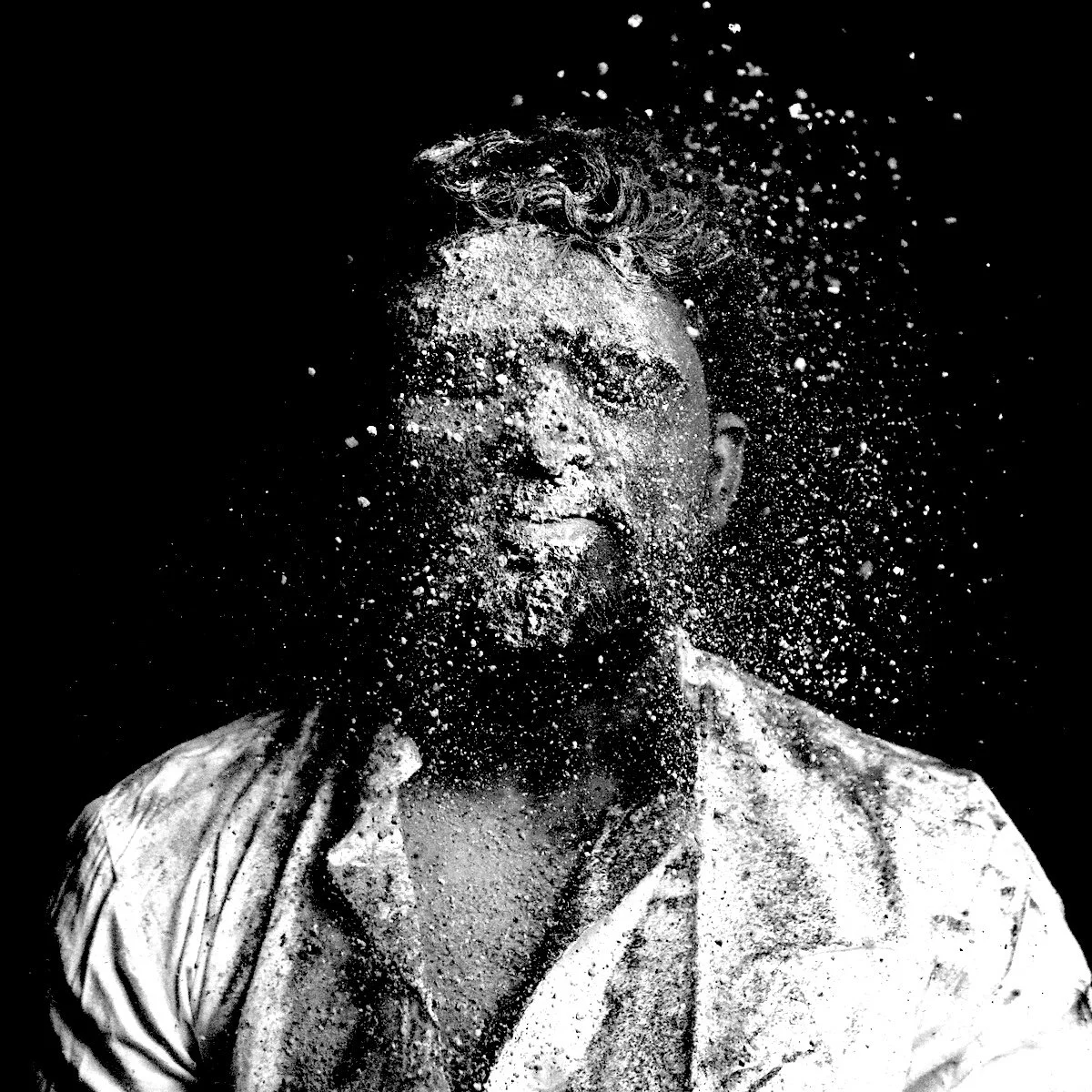
“There is no sexual relation.”
– Jacques Lacan
“The Hunger That Cannot Be Fed”
This is the line that drove generations of psychoanalysts mad.
To most people it sounds absurd.
To men, if they’re honest, it sounds uncomfortably familiar.
Lacan wasn’t saying men and women can’t connect.
He was saying there’s an impossibility baked into human desire.
Two people can touch, love, share a life, build a home, raise children, sleep in the same bed for decades, and still experience a gap that can’t be closed.
A gap no achievement can fill.
A gap no woman can bridge.
A gap no purpose can patch.
A gap no ritual can seal.
A gap at the centre of a man’s life that refuses to go away.
Most men spend their entire adult lives trying to deny that gap.
Chasing the fantasy that something out there will complete them.
A partner.
A mission.
A big enough win.
A number in the bank.
A reputation strong enough to drown out fear.
A body that broadcasts invulnerability.
A lifestyle that says I made it.
But the gap remains.
Lacan called it lack.
Not deficiency.
Structure.
And until a man learns how to live with that lack instead of running from it, he will be hungry in a way that no amount of success can feed.
The mistake every man makes
Men don’t fear failure.
They fear emptiness.
They fear the space inside themselves that nothing seems to fill.
So they do what men do best.
They work.
Build.
Push.
Perform.
Prove.
Compete.
Collect.
Impress.
Seduce.
Control.
And at night, when all the lights are off, they feel it again.
The hollow.
The ache.
The unfinished sentence.
The quiet sense that something is missing.
The trap is simple:
Men mistake the structural lack for a personal flaw.
They think they’re broken.
Insufficient.
Inadequate.
Not enough of a man.
So they double down on the strategies that will never fix it.
Lacan’s point was sharp:
You are not empty because something went wrong.
You are empty because that is the condition of desire.
If you didn’t lack, you wouldn’t desire.
If you didn’t desire, you wouldn’t move.
If you didn’t move, you wouldn’t live.
The emptiness is the engine.
But men treat it like a wound.
The fantasy of completion
Every man has a private fantasy of the moment where everything will finally click into place.
The day he’ll feel whole.
Settled.
Enough.
Done.
For some men it’s the perfect woman.
For others it’s the perfect body.
For others it’s the perfect business.
For some it’s the perfect spiritual awakening or the perfect heroic identity.
There’s always a perfect something waiting just beyond the horizon line.
Lacan calls this the fundamental fantasy - the story we tell ourselves about the thing that will resolve the tension at the centre of our existence.
But the fantasy is always a lie.
Even when you get the thing you wanted, the hunger returns.
Not because the thing was wrong, but because it wasn’t designed to complete you.
Completion is impossible.
The fantasy isn’t there to be fulfilled.
It’s there to keep you moving.
But when a man doesn’t understand this, he becomes trapped.
He keeps chasing the next thing.
The next woman.
The next mission.
The next transformation.
The next identity.
The next dopamine hit that promises a moment of peace.
And every time the hunger returns, he thinks he’s failed.
Men who don’t understand lack become dangerous to themselves
Men who believe they can outrun lack become obsessive.
Addicted.
Restless.
Dissatisfied with
Dissatisfied with everything and grateful for nothing.
Because when a man believes the hunger can be fed, he starts treating life like consumption.
He consumes experiences instead of inhabiting them.
Consumes women instead of loving them.
Consumes spirituality instead of transforming.
Consumes success instead of building meaning.
And eventually he becomes a bottomless pit wearing a nice watch.
This is the shadow side of modern masculinity.
Not aggression.
Not dominance.
Insatiability.
The inability to sit with the unfinished nature of being alive.
Bataille understood this better than most.
He knew there was something excessive in man.
Something that wanted to push beyond limits.
Not just sexually, but existentially.
A hunger for intensity.
For transcendence.
For rupture.
For moments that break the deadness of ordinary life.
The problem is that most men seek transcendence through consumption rather than confrontation.
They want the high without the sacrifice.
The meaning without the death.
The transformation without losing anything.
But real transformation always costs.
Why modern men are exhausted
Because they’re trying to become complete.
And completeness is impossible.
So they live in a permanent state of pursuit.
Always optimising.
Always improving.
Always chasing the next version of themselves.
Always one step away from finally arriving.
And it never happens.
The body breaks under that pressure eventually.
The nervous system starts screaming.
Sleep gets thinner.
Relationships become functional instead of intimate.
Nothing lands properly anymore.
Even pleasure becomes dull.
This is what happens when a man treats lack as failure instead of reality.
Lacan’s point was never pessimistic.
It was liberating.
You do not need to eliminate the hunger to live a meaningful life.
You need to stop worshipping the fantasy that says it can be eliminated.
The man who accepts lack becomes calmer.
Sharper.
More grounded.
More dangerous in the right way.
Because now he stops expecting the world to complete him.
And that changes everything.
He can love a woman without demanding she save him.
He can build something meaningful without expecting it to cure his emptiness.
He can succeed without believing success is salvation.
He can feel desire without becoming enslaved by it.
The hunger remains.
But now it becomes fuel instead of desperation.
The world suffers when men refuse their hunger
This part matters.
A man who cannot tolerate his own lack becomes unstable.
He becomes addicted to distraction.
To validation.
To novelty.
To stimulation.
To being wanted.
To winning.
And eventually he starts organising his entire life around avoiding stillness.
That kind of man cannot lead anything properly.
Not because he lacks intelligence or strength.
Because he is internally ungoverned.
The world does not need men who are full.
Those men do not exist.
The world needs men who can stand inside their incompleteness without collapsing into appetite.
Men who can carry desire without becoming consumed by it.
Men who understand that the hunger is part of the structure, not evidence they are broken.
That kind of man brings weight into a room.
Stillness.
Presence.
Direction.
Not because he solved the emptiness.
Because he stopped running from it.
The turning point: when a man stops chasing completion
There is usually a moment.
Quiet.
Private.
Almost easy to miss.
A man gets the thing he thought would finally do it.
The relationship.
The money.
The breakthrough.
The recognition.
And instead of relief, he feels something else.
The hunger is still there.
For a second, the fantasy cracks.
And if he’s honest in that moment, something powerful becomes possible.
He realises the problem was never that he lacked enough.
The problem was believing he was supposed to stop lacking altogether.
That realisation changes the game.
Now life is no longer about completion.
It becomes about participation.
About building.
Loving.
Creating.
Leading.
Suffering well.
Telling the truth.
Carrying the hunger consciously instead of compulsively.
That is adulthood.
Not fullness.
Capacity.
The real-world task
Tonight, sit somewhere without distraction.
No music.
No phone.
No stimulation.
And ask yourself:
“What am I still secretly expecting to complete me?”
Write down the answer immediately.
Don’t edit it.
Don’t intellectualise it.
Then ask a second question:
“What would change if I stopped asking this thing to save me?”
Sit with whatever comes.
The reflective question
What if the hunger you keep trying to get rid of is actually the thing that keeps you alive?
Reading list
The Ethics of Psychoanalysis - Jacques Lacan
The Accursed Share - Georges Bataille
The Denial of Death - Ernest Becker
Thus Spoke Zarathustra - Nietzsche
The Book of Disquiet - Fernando Pessoa