The Man Who Forgot His Own Fire.
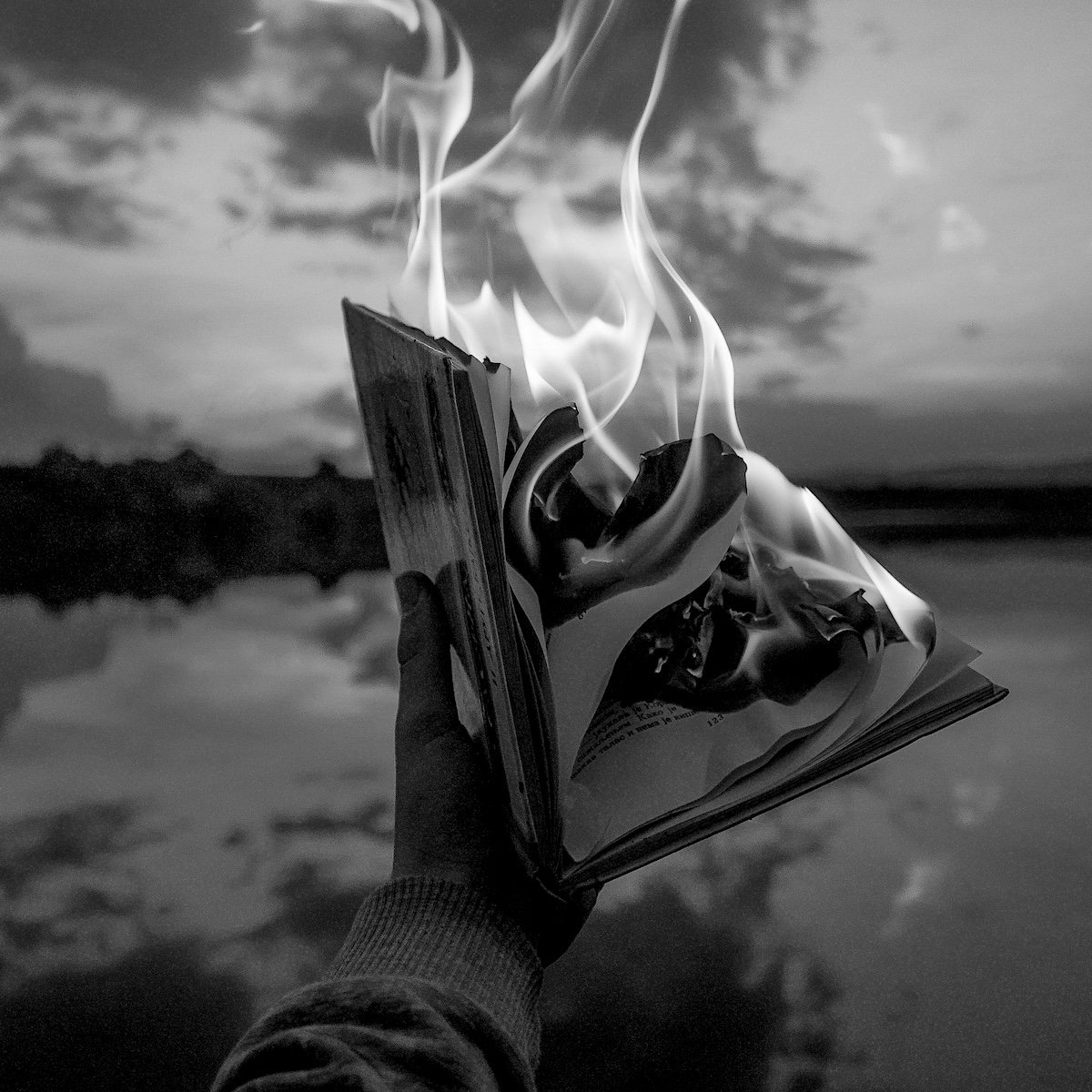
“What matters most is how well you walk through the fire.”
– Charles Bukowski
There’s a sickness that spreads quietly through the lives of capable men
It doesn’t look dramatic.
There’s no collapse.
No obvious wound.
No cinematic breakdown.
It looks like competence.
It looks like a man who’s mastered the checklist.
It looks like stability.
It looks like reliability.
It looks like “he’s doing well”.
But if you watch closely, you’ll see the truth:
The fire’s gone out.
The man didn’t notice the moment it happened.
Men rarely do.
The extinguishing isn’t violent.
It’s subtle.
A slow erosion of heat.
A gradual distancing from the intensity that once made life feel real.
The fire didn’t die because he failed.
It died because he abandoned something essential inside himself - something Hillman would call soul, Lacan would call desire, and Nietzsche would call the will.
And Bukowski?
He’d just say the man lost his guts.
The quiet death of the inner flame
Every man starts life with a kind of inner combustion.
A raw hunger.
A clarity that doesn’t come from thought.
A pulse that says: I want this.
Not for status.
Not for applause.
Not for anyone’s gaze.
For itself.
For the burn.
For the aliveness.
But somewhere along the way, life begins to tame that flame.
Not through tragedy.
Through responsibility.
Through performance.
Through roles.
Through the slow creep of expectation.
Hillman would say the daimon - your innate pattern - gets muffled beneath the noise of adulthood.
Nietzsche would say the herd pulls you back into its safety.
Lacan would say the Other’s desire replaces your own.
But Bukowski?
He’d say you sold your fire for comfort and pretended it was maturity.
Men do this without noticing.
They remodel themselves into versions that are easier for the world to digest.
They become useful instead of alive.
They become consistent instead of dangerous.
They become responsible instead of real.
And then one day they wake up and something feels missing.
The fire.
The mask that kills the heat
There’s a performance most men perfect by thirty-five.
Part competence.
Part charm.
Part stoicism.
Part exhaustion hidden under humour.
Part carefully curated direction.
The problem isn’t the mask.
Masks are necessary.
The problem is when the mask becomes the man.
When the role replaces the subject.
When the identity replaces the instinct.
When the life lived becomes a life maintained.
Lacan would say the man has mistaken the symbolic self for the real one.
Hillman would say the image of the life has replaced the soul of it.
Nietzsche would call it decadence - a man sedated by his own stability.
Bukowski would put it more simply:
“You got soft.”
Not soft in muscle or competence.
Soft in the fire that forged you.
The fireless man becomes dangerous in the wrong way
A man without fire doesn’t become safe.
He becomes unstable.
He becomes resentful.
He becomes passive aggressive.
He becomes restless in ways he can’t explain.
He becomes overly controlled or uncontrollably avoidant.
He becomes a ghost in his own home.
He becomes a shadow at work.
He becomes a body moving through a life he isn’t living.
And the world can feel it.
Partners feel it.
Children feel it.
Friends feel it.
The man himself feels it most, but fears naming it.
Because naming it forces a reckoning.
What killed the fire?
And more painfully:
Why did I let it happen?
Men lose their fire not through weakness, but through misdirection
The modern man is drowning in the wrong demands.
The command to perform.
The command to optimise.
The command to be responsible.
The command to enjoy.
The command to be impressive.
The command to be steady.
And no man can carry all that without losing something vital.
Hillman would say your soul is starving.
Nietzsche would say you’ve betrayed your becoming.
Lacan would say you’re obeying the Other’s script.
Bukowski would say you’ve become boring.
But beneath all that psychological and philosophical framing sits one truth:
A man loses his fire when he stops living close to the edges of himself.
When he stops taking risks that feel real.
When he stops telling truths that cost him something.
When he stops pursuing the kind of desire that scares him a little.
When he stops claiming his own life.
A fireless man is a man who has drifted too far from the raw centre of his existence.
The world weakens when men lose their fire
This part stays subtle, but it can’t be avoided.
A fireless man doesn’t just weaken himself.
He weakens the space around him.
A home without a man’s fire becomes directionless.
A community without fired men becomes passive.
A society without fire becomes cynical.
A generation raised by men without fire becomes lost.
The world isn’t saved by stable men.
It’s stabilised by them.
But it’s moved, challenged, reshaped, held, energised, confronted, transformed - by men who carry fire.
Men who are not afraid of their own heat.
The turning point: the moment the fire asks to return
It always starts as irritation.
A sense of being off.
A quiet discomfort in the success you’ve built.
An itch under the surface.
A restlessness that won’t go away.
Then something happens - small.
Barely noticeable to anyone else.
But seismic to you.
A conversation you didn’t expect to have.
A silence that feels too honest.
A night where you can’t distract yourself.
A truth spoken by someone who doesn’t fear you.
A moment where you see your reflection and don’t recognise the man staring back.
The fire stirs.
It doesn’t roar.
It glows.
Just enough for you to feel the heat you’ve been missing.
And in that moment, you face a choice most men run from:
Do you want your fire back?
Because if you do, your life will change.
The real-world task: return to one forbidden want
Not the polished want.
Not the impressive want.
Not the socially acceptable want.
The want you pushed away because it was inconvenient.
The want you buried because it threatened the structure.
The want that once made you feel alive.
Pick one:
• A truth you’ve silenced
• A creative instinct you abandoned
• A direction you stopped allowing yourself to consider
• A conversation you’ve avoided
• A version of yourself you exiled
• A physical challenge you’ve postponed for years
• A risk that scared you into paralysis
Do something small that reactivates that want.
Not to overhaul your life.
To reintroduce heat.
Fire begins with friction.
The reflective question
What part of you did you burn down to keep the peace?
And what would happen if you lit that part again?
Reading list
Letters to a Young Poet - Rilke
Thus Spoke Zarathustra - Nietzsche
The Soul’s Code - James Hillman
Ham on Rye - Bukowski
The Four Fundamental Concepts of Psychoanalysis - Lacan