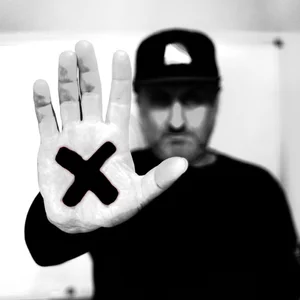
The Man Who Stopped Looking at His Own Life.
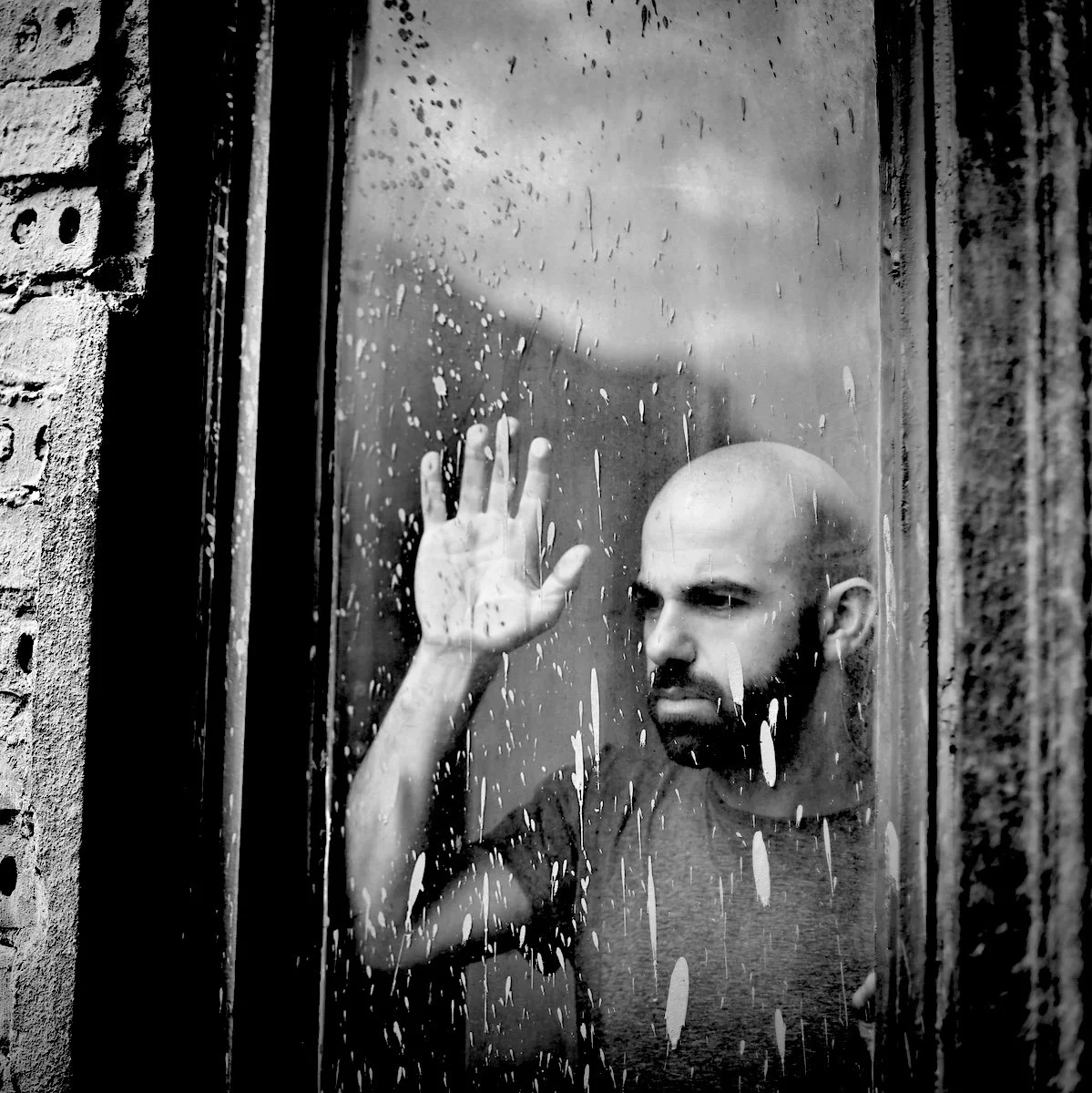
“If I’m an advocate for anything, it’s to move. To just walk away from the damn fridge.”
– Anthony Bourdain
Every man reaches a point where he stops really looking at his life
Not because he’s blind.
Because looking directly would demand action he isn’t ready to take.
So he glances instead.
Sideways.
Through habit.
Through routine.
Through excuses.
Through the blur of busyness.
He sees enough to function, but not enough to feel.
He knows enough to talk, but not enough to move.
He senses something is off, but never long enough to face it.
A man can live twenty years like this.
Eyes open.
Vision gone.
Lacan would say he’s lost in the Imaginary - living through a filtered reflection of himself.
Van der Kolk would say the body has locked down the truth to keep him functioning.
Campbell would say he refuses the call.
Bourdain would say he’s stuck in a life that no longer has any seasoning.
And all four would be right.
The quiet disappearance of vision
Men don’t lose their sight all at once.
They lose it through avoidance.
• Avoiding the conversation that would shatter the lie
• Avoiding the truth about a relationship that’s been dead for years
• Avoiding the desire that threatens the identity
• Avoiding the pain that hasn’t been touched since childhood
• Avoiding the boredom that reveals the deeper hunger
• Avoiding the mirror because the man staring back is asking questions
Avoidance is a clever animal.
It disguises itself as structure.
As stability.
As strategy.
As responsibility.
As “doing the right thing”.
But underneath the rationalisations is a simpler truth:
Most men stop looking because they already know what they’d see.
And it scares them.
Trauma is a story the body won’t let you read
Van der Kolk teaches that trauma isn’t the event.
It’s the story that gets frozen because it was too overwhelming to metabolise.
Men carry frozen stories inside them.
Most never get read.
Some never even get named.
The story of the boy who had to become the adult too early.
The story of the man who was never allowed to show anger.
The story of the son who lived in the shadow of someone else’s desires.
The story of the boy who learned to be invisible to avoid conflict.
The story of the man who watched love collapse and decided never to trust it again.
These stories become blind spots.
Entire regions of a man’s psyche locked behind fog.
Not because he’s weak.
Because he needed to survive.
But survival stories don’t make good adult lives.
You can’t build a future on a frozen past.
The gaze that traps you is often your own
Lacan talks about the gaze - not just being looked at, but being caught in the eyes of an identity that requires you to play a certain role.
Most men look at their life through the gaze of the man they’re pretending to be.
Not the man they are.
Not the man they could be.
The man they believe others need them to be.
That gaze becomes a cage.
You see yourself through the expectations of:
Your partner
Your children
Your parents
Your colleagues
Your clients
Your culture
Your past self
Your imagined audience
Your performance persona
And eventually you stop seeing anything else.
Vision collapses into obligation.
Presence collapses into performance.
Desire collapses into duty.
And the real man recedes into the shadows.
Campbell’s warning: refusing the call turns the soul sick
Campbell said every man is called into the unknown.
Not once, but endlessly.
Every time the call comes, you’re given a choice:
Step forward and transform
or
Step back and decay
Refusing the call doesn’t lead to stability.
It leads to spiritual rot.
This rot looks like:
A slow, souring resentment
A sense of being unfulfilled even in success
A quiet bitterness you don’t want to admit
An ache you can’t explain
A numbness you justify as “focus”
A sense that you’re drifting through someone else’s life
A hunger for something you’re afraid to name
This is the cost of not looking.
This is the cost of refusing the threshold.
Bourdain’s lesson: the truth tastes better than the performance
Bourdain had a gift for cutting straight through the bullshit.
He understood appetite.
Not just for food.
For life.
For honesty.
For experience.
For places that changed the way you breathe.
He also understood something Lacan and Campbell rarely say plainly:
A man who stops looking at his life stops tasting it.
He starts living on autopilot.
Eats the same food.
Uses the same excuses.
Repeats the same days.
Has the same conversations.
Sleeps in the same discomfort.
Wakes with the same fog.
Life becomes functional, not flavourful.
A man doesn’t need chaos.
But he needs taste.
Or he dies inside long before he dies outside.
The world weakens when men stop looking
Here is the underlying thread, gently woven:
When men stop looking at themselves, they stop showing up in the world.
Their leadership becomes autopilot.
Their parenting becomes surface-level.
Their relationships become transactional.
Their communities lose their spine.
Their presence becomes diluted.
The world doesn’t collapse because men lose their sight.
It corrodes.
A home without a man’s clarity becomes anxious.
A community without a man’s insight becomes directionless.
A society without men who look honestly becomes morally confused.
The world needs men who see.
Men who examine.
Men who confront.
Men who don’t hide from themselves.
Men who can look directly.
The turning point: the moment your life looks back
There is a moment - often unexpected - when the world places a mirror in front of you.
A sentence someone says.
A disappointment that pierces.
A moment of loneliness in a crowded room.
A silence that feels heavier than it should.
A flash of disgust at the life you’re pretending to enjoy.
A truth whispered from inside your body.
And suddenly your life looks back.
Unfiltered.
Unforgiving.
Uninterested in your excuses.
This is the threshold.
The call.
The line in the sand.
This is the chance to see again.
The real-world task: take one honest look
Pick one thing in your life you’ve been avoiding.
Then look at it directly.
No commentary.
No justification.
No reframing.
Just look.
It might be:
• A relationship that’s been over for years
• A job that’s killing you quietly
• A habit that numbs instead of nourishes
• A truth you’ve been swallowing
• A desire you buried
• A boundary you abandoned
• A dream you’re afraid to admit
• A fear you keep performing over
Don’t fix it.
Don’t act on it.
Just look.
Real vision is the beginning of everything.
The reflective question
What truth have you refused to look at because you know once you see it, you can never unsee it?
Let the answer rise.
It already knows you.
Reading list
The Body Keeps the Score - van der Kolk
The Hero with a Thousand Faces - Campbell
Kitchen Confidential - Bourdain
Desire and Its Interpretation - Lacan
The Soul’s Code - Hillman